
- Flat, lightweight planar optical design based on diffractive phase distribution
- Fabricated using Liquid Crystal Polymer (LCP) functional layers and N-BK7 glass substrates
- Polarization-dependent operation enabling beam convergence or divergence control
- Free from spherical aberration for high-quality beam shaping
- High optical stability and durability under laboratory and industrial conditions
- Precise wavefront control through engineered micro/nano phase structures
- Single-wavelength optimized performance with uniform λ/2 phase retardation
- Anti-reflection (AR) coated incident surface for improved transmission efficiency
- Available in multiple configurations: planar lenses, microlens arrays, cylindrical lenses, cylindrical arrays, and multifocal lenses
- Suitable for beam shaping, homogenization, focusing, and multi-spot generation
- Suppressed zero-order diffraction (for multifocal designs) for improved energy distribution
- Compact sandwich or single-substrate flat-plate structure
- Customizable wavelengths, focal lengths, apertures, and phase designs
- Ideal for laser systems, imaging applications, optical research, and scientific instrumentation
- Submicron LCP microstructure fabrication for high precision optical performance


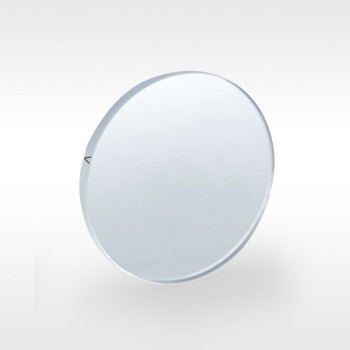
Diffractive Lenses
Diffractive Lenses from LBTEK are advanced flat optical components fabricated using liquid crystal polymer (LCP) functional layers combined with N-BK7 glass substrates. These planar optical elements utilize precisely engineered phase distributions to control light fields with high accuracy. Due to their polarization-dependent characteristics, they can enable beam convergence or divergence depending on the polarization state of the incident light.
Planar Microlens Array
LBTEK Planar Microlens Array is fabricated on an N-BK7 window substrate with a single-layer diffractive design. One surface is coated with a liquid crystal polymer (LCP) film that provides uniform λ/2 phase retardation across the full clear aperture at the specified working wavelength. The opposite surface is treated with an anti-reflection (AR) coating, and it is recommended to use the AR-coated side as the incident surface.
Planar Cylindrical Lens Array
The LBTEK Planar Cylindrical Lens Array is a diffractive optical component designed for one-dimensional beam shaping and homogenization. It consists of a polymer thin film integrated between two N-BK7 glass substrates. The one-dimensional phase distribution within the LCP layer provides cylindrical lens array functionality with high precision.
Planar Lens
Planar Lens is a polarization-dependent diffractive optical element capable of both beam convergence and divergence. The output polarization handedness is opposite to that of the incident beam. By adjusting the input polarization state, the energy distribution between converging and diverging beams can be precisely controlled.
Multifocal Lens
Multifocal Lens is a precision diffractive optical element designed to operate in combination with focusing lenses, enabling multiple focal points along the propagation axis. The phase distribution is optimized based on incident beam divergence, size, and energy profile.
Benefits
Specifications
Specifications
- Material & Structure
-
- Substrate Material: N-BK7 Optical Glass
- Functional Layer: Liquid Crystal Polymer (LCP)
- Structure Type: Planar flat-plate (single-substrate or sandwich structure)
- Coating: Anti-Reflection (AR) coating on incident surface
- Phase Retardation: Uniform λ/2 at design wavelength
-
- Optical Performance
-
- Operating Principle: Diffractive phase modulation
- Polarization Dependence: Yes (polarization-controlled convergence/divergence)
- Aberration: Free of spherical aberration
- Zero-Order Diffraction Efficiency (Multifocal): < 4%
- Dispersion: High (single-wavelength optimized)
-
- Dimensional Parameters
-
- Standard Dimensions: 25.4 mm diameter / 25.4 × 1.6 mm or 25.4 × 3.2 mm thickness options
- Clear Aperture: Ø20 mm / Ø21.5 mm (model dependent)
- Cut-Edge Orientation: Parallel to emitted beam profile (square or line-shaped output)
-
- Wavelength Options
-
- Available Design Wavelengths:
- 520 nm
- 532 nm
- 633 nm
- 650 nm
- 850 nm
- 915 nm
- 940 nm
- 976 nm
- 1064 nm
-
- Focal Length Options
-
- Standard Focal Lengths: 50 mm, 75 mm, 100 mm
- Multifocal Range: 50 mm – 250 mm (Δ = 50 mm spacing)
-
- Microlens & Array Parameters
-
- Microlens Unit Size: 0.3 × 0.3 mm (standard microlens array)
- Cylindrical Array Unit Size: 0.5 × 25.4 mm / 1.0 × 25.4 mm
- Output Beam Profile: Square, line-shaped, or multi-spot (depending on model)
-
- Product Variants
-
- Planar Lens (bi-directional focusing/diverging)
- Planar Cylindrical Lens (one-dimensional beam control)
- Planar Microlens Array (beam homogenization & shaping)
- Planar Cylindrical Lens Array (line beam uniformity)
- Multifocal Lens (multi-focus beam generation)
-
- Operating Requirements
-
- Incident Beam: Should match clear aperture (especially for multifocal lenses)
- Polarization Control: Required for optimal optical functionality
- Recommended Incident Side: AR-coated surface
-
- Applications
-
- Laser beam shaping and homogenization
- Optical imaging systems
- Scientific and research instrumentation
- Multi-spot laser processing
- Beam splitting and uniform illumination systems
-
- Customization :Custom wavelengths, focal lengths, apertures, and phase distributions available upon request.
Applications
Applications
- Laser beam shaping and homogenization for uniform intensity profiles
- Optical imaging systems requiring compact and aberration-free planar optics
- Scientific research and experimental optical setups
- Multi-spot beam generation for laser processing and micromachining
- Optical measurement and metrology systems
- Beam splitting and multi-focus optical systems
- Fiber coupling and collimation in laser modules
- One-dimensional beam shaping for line illumination applications
- Structured light generation (square beam, line beam, annular beam, Bessel beam)
- Laser scanning and projection systems
- Optical trapping and manipulation experiments
- Holography and diffractive optical system integration
- Medical and biomedical laser applications
- Industrial laser processing and material treatment
- Machine vision and illumination uniformity systems
- Optical communication and photonics research
- Spectroscopy and analytical instrumentation
- Microlens-based light homogenizers for display and illumination systems
- OEM integration in compact photonic and laser devices


Reviews
There are no reviews yet.